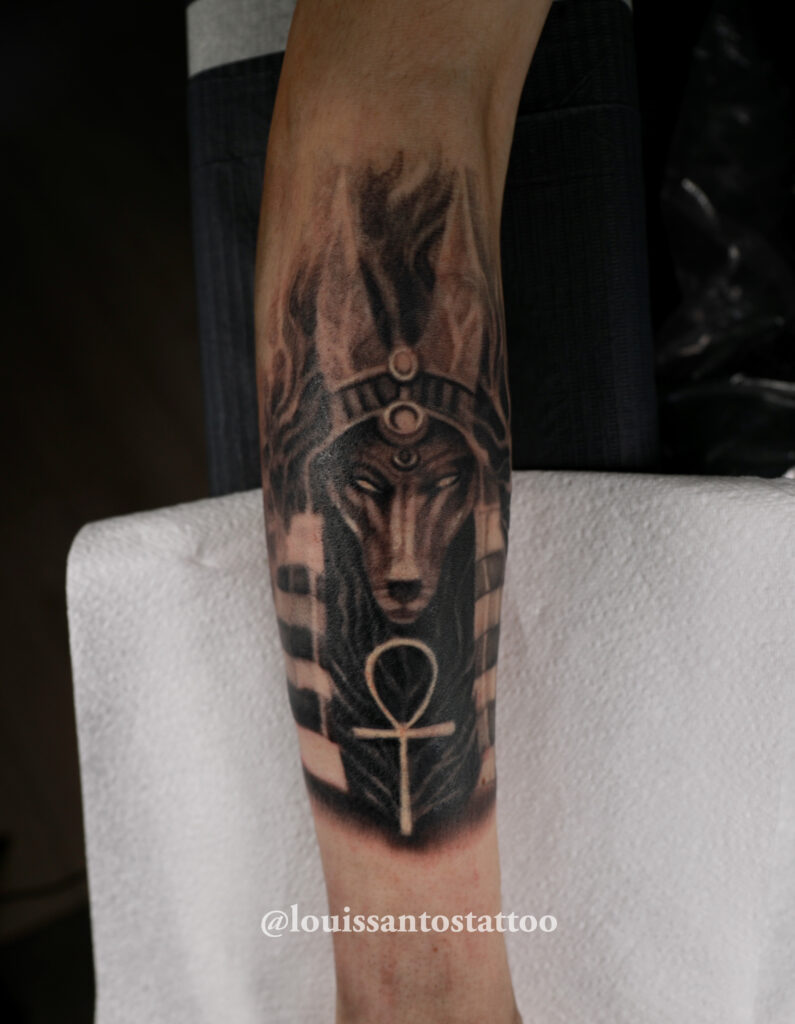
Egyptian Mythology Manchester

Egyptian Mythology is a style of art close to my heart, they had a fascination system of beliefs, myths and spiritual rituals. I believe egyptian mythology was a culture where they got closer to explain the mystery of the universe.

The cicles of nature, the afterlife were the life purpose of the pharaos. Egyptian Mythology is rich with symbolism, reflacting the cycles of life, death, and re-birth.

I love to draw Egyptian mythology, based on my urge to create something new within the Egyptian Mythology perspective. Drawing new images related to egyptian mythology, it gets me ready with better ideas, which i can deliver the idea to the tattoo process, when practising drawing the style you are about to tattoo, it enhances the creative part on the tattoo, creating a better looking tattoo.

Tattoo Studio Bury

Manchester Tattoo Artist

Egyptian Tattoo Leeds

Tattoo Studio Leeds

Leeds Tattoo Studio

Egyptian mythology Tattoos is a rich and intricate belief system that played a central role in the lives of ancient Egyptians for millennia. Rooted in the religious practices and stories of this ancient civilization, Egyptian mythology provided a framework for understanding the world, the afterlife, and the divine. At the heart of Egyptian mythology were the gods and goddesses, each with their unique characteristics and domains. The pantheon included well-known deities like Ra, the sun god, who was believed to journey across the sky each day, and Osiris, the god of the afterlife and resurrection. Isis, Osiris’ wife and sister, played a crucial role in his resurrection and was revered as a symbol of maternal care. One of the most fascinating aspects of Egyptian mythology was its intricate cosmology. Egyptians believed in a complex cosmological order where the physical world and the divine realm were interconnected. The Nile River, for instance, was seen as a reflection of the Milky Way, symbolizing the bridge between the earthly and celestial realms. The concept of the afterlife was central to Egyptian mythology. The belief in an eternal journey beyond death was ingrained in their culture, and elaborate funeral rituals were performed to ensure a safe passage to the afterlife. The Book of the Dead, a collection of spells and instructions, guided the deceased through the challenges they would face in the afterlife. Animals also held a special place in Egyptian mythology, with many gods and goddesses associated with specific animals. The falcon-headed god Horus, for instance, symbolized protection and kingship, while the cat goddess Bastet represented home and fertility. Pyramids, monumental tombs for pharaohs, were not just architectural wonders but also a manifestation of Egyptian mythological beliefs. They were constructed to align with the cardinal points and served as a means to facilitate the pharaoh’s journey to the afterlife. While Egyptian mythology was deeply ingrained in their society, it evolved over thousands of years, adapting to changes in rulers and external influences. Despite its eventual decline with the rise of Christianity and Islam, elements of Egyptian mythology continue to captivate the modern world, as they offer a glimpse into the beliefs and values of one of history’s most enduring civilizations.
 
Click link bellow for You Tube Video, Instagram page and Facebook
 
Thank you


Egyptian Mythology Digital Art

Tattoo Studio Leeds

Ancient Egyptian Gods and the Art of Resurrection Ancient Egypt, known for its rich culture and deep spiritual beliefs, was home to a pantheon of gods and a complex system of religious practices. Among the most fascinating aspects of this civilization were their beliefs in the afterlife and the role of gods in bringing people back to life. In ancient Egypt, gods played a pivotal role in daily life. The Egyptians believed in a multitude of deities, each with unique characteristics and responsibilities. Some of the most prominent gods included Ra, the sun god; Osiris, the god of the afterlife; and Anubis, the god of mummification and the dead. The concept of resurrection was closely tied to their beliefs in the afterlife. Egyptians believed that the soul, or “ka,” continued to exist after death, and it needed a well-preserved body to ensure a successful journey to the afterlife. This led to the practice of mummification, which was a complex and highly ritualized process. The goal was to preserve the body so that the ka could recognize it in the afterlife. The role of the god Anubis was critical in this process. Anubis was depicted as a jackal-headed figure and was responsible for guiding the deceased through the various stages of the afterlife. He was also the guardian of cemeteries and the god of embalming. When a person died, their body was taken to a temple where skilled embalmers, often priests, would cleanse and preserve it. During the mummification process, various prayers and rituals were performed to invoke the blessings of the gods. This included spells from the Book of the Dead, a collection of texts that provided guidance for the deceased in the afterlife. These spells were believed to aid the soul in its journey and protect it from malevolent forces. Additionally, offerings and sacrifices were made to the gods, particularly to Osiris, who was considered the ruler of the afterlife. Osiris was believed to be the first mummy, resurrected by the magic of his wife and sister, Isis. This myth served as a powerful symbol of resurrection and eternal life. The belief in resurrection extended beyond the physical body. The Egyptians also believed in the concept of a second death, where a person’s name and memory would be preserved through inscriptions and offerings. This belief in the power of remembrance was deeply ingrained in Egyptian society.
 
Ancient Egyptian gods played a central role in the beliefs and practices related to resurrection. The preservation of the body through mummification and the invocation of gods like Anubis and Osiris were crucial in ensuring a successful journey to the afterlife. These beliefs not only reflected the Egyptians’ profound spirituality but also their enduring fascination with the concept of life after death.
 
Click link bellow to visit my Instagram page, thank you


Egyptian Mythology Tattoo

Amara Female Egyptian Warrior

Leeds Tattoo Palour

Once upon a time in ancient Egypt, there lived a fierce and skilled warrior named Amara. She possessed unmatched strength, unwavering determination, and a heart full of courage. Amara’s prowess on the battlefield was renowned, and she was respected and feared by both allies and foes alike.
 
One fateful day, during a heated battle against a rival kingdom, Amara found herself separated from her comrades. She fought bravely, wielding her sword with precision and her shield with unwavering resolve. As she clashed with her opponents, an unexpected twist of fate led her to a hidden chamber deep within an ancient temple.
 
Inside the chamber, Amara discovered a mystical artifact—a glowing gem of extraordinary beauty and power. Intrigued by its radiance, she reached out to touch it, and at that moment, a surge of energy coursed through her body. She felt a strange connection with the gem and an overwhelming sense of calm and clarity washed over her.
 
Amara’s warrior instincts gave way to a newfound curiosity and a desire for knowledge. Guided by the mysterious gem’s energy, she embarked on a spiritual journey, seeking enlightenment and wisdom. She delved into the ancient teachings of her ancestors, studying the ways of the pharaohs and the mysticism of the land.
 
Through her quest, Amara learned about the delicate balance between strength and compassion, power and humility. She discovered that true enlightenment lay not only in the physical battles she had fought but also within her own soul. She trained her mind as rigorously as she trained her body, mastering the art of self-reflection and meditation.
 
As she grew spiritually, Amara’s presence on the battlefield changed. She no longer fought with blind aggression but with a profound understanding of her adversaries and the conflicts that plagued their hearts. She became a symbol of hope, a beacon of light in the darkness of war.
 
Word of Amara’s transformation spread far and wide, reaching even the ears of the pharaoh himself. Intrigued by her enlightenment and inspired by her dedication to peace, the pharaoh summoned her to his court. There, Amara shared her newfound wisdom and taught others the value of balance, compassion, and understanding.
 
Amara’s journey from a fearless warrior to an enlightened sage inspired countless others, both men and women, across the land. Her legacy became intertwined with the ancient tapestry of Egypt, reminding future generations that true strength came not just from physical might, but from the harmony of body, mind, and spirit.
 
And so, Amara, the Egyptian Female Warrior, forever etched her name in the annals of history as a beacon of enlightenment and a testament to the power of transformation.


  • Book your tattoo