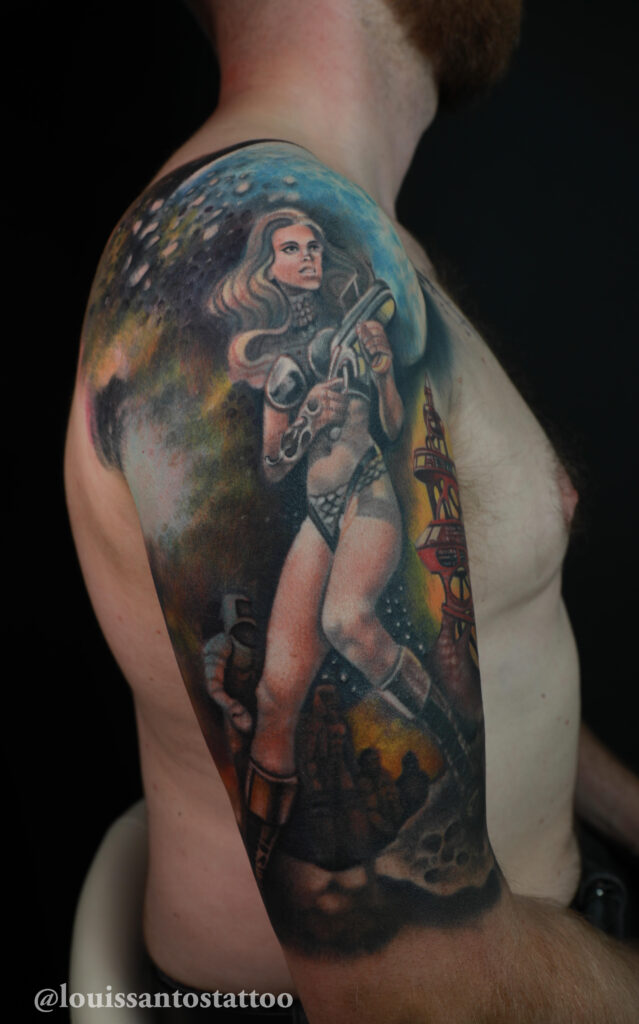
Barbarella Half Sleeve Tattoo Leeds

Tattoo Artist Leeds

Leeds Tattoo Artist

Lorem ipsum dolor sit amet, consectetur adipiscing elit. Ut elit tellus, luctus nec ullamcorper mattis, pulvinar dapibus leo.

It was a pleasure Tattooing this half sleeve tattoo, in our tattoo studio in Leeds, from a classic 60’s movie. My client was really into retro movies. As i like to get in to what the client wants to get tattooed, i was sure to watch the movie, to get in to the vibe before doing the tattoo. Jane Fonda really makes you be a fan of 60’s pin-ups, after watching Barbarella. Her natural looks, makes you realise what real beauty really is, back in the 60’s, everyone was so natural looking, and what you were thats what you got.

Click link bellow to visit me on Instagram.

3D Mandala Tattoo Leeds

Leeds Tattoo Artist


The Astonishing World of 3D Tattoos: Artistry Beyond the Skin’s Surface In the realm of tattoo artistry, 3D tattoos stand out as a mesmerizing and visually striking genre. These tattoos go beyond traditional two-dimensional designs, creating the illusion of depth and dimension on the skin. In this exploration of 3D tattoos, we will delve into their history, the artistic techniques behind them, and the mind-bending effects they achieve. **A Brief History:** The concept of 3D tattoos is a relatively recent development in the world of tattooing. While tattoos themselves have an ancient history dating back thousands of years, the idea of creating three-dimensional illusions on the skin is a product of contemporary tattoo innovation. It gained momentum in the early 21st century, driven by advances in tattoo equipment, ink, and the creative vision of tattoo artists worldwide. **Artistic Techniques:** Creating a 3D tattoo requires a blend of artistic skill, technical precision, and an understanding of the human body’s contours. Tattoo artists achieve the illusion of depth through a combination of shading, perspective, and color manipulation. Here are some key techniques involved: 1. **Shading and Highlights:** One of the fundamental techniques in 3D tattooing is shading. By carefully applying various shades of ink, artists create the illusion of shadows and highlights. This gives the tattoo a sense of depth, making the image appear as though it’s rising from the skin. 2. **Perspective:** Artists use perspective to make the tattoo design look as though it’s receding into the skin or popping out. This involves distorting the image slightly to align with the body’s natural contours. 3. **Color Manipulation:** Vibrant colors are often employed to enhance the 3D effect. Skillful use of color can make the tattoo appear more lifelike and immersive. 4. **Optical Illusions:** Some 3D tattoos incorporate optical illusions, such as an image that seems to burst through the skin or reveal hidden layers beneath. These tattoos play with the viewer’s perception, adding an element of surprise and intrigue. **Mind-Bending Effects:** The impact of a well-executed 3D tattoo can be truly mind-bending. Whether it’s a hyper-realistic butterfly seemingly perched on the skin, a lifelike snake slithering along the arm, or an intricately carved portal leading to another world, 3D tattoos have the power to captivate and amaze. One of the most popular themes for 3D tattoos is the “ripped skin” effect, where the tattoo appears to tear through the flesh, revealing something unexpected beneath. These tattoos often feature elements like mechanical parts, animal eyes, or even intricate landscapes hidden beneath the surface. The element of surprise and the illusion of a second reality just beneath the skin make these tattoos a compelling choice for those seeking a unique and attention-grabbing design. **Challenges and Considerations:** While 3D tattoos offer incredible visual appeal, they also present challenges for both the artist and the wearer. Achieving the desired 3D effect demands meticulous attention to detail and a keen understanding of human anatomy. Mistakes in perspective or shading can disrupt the illusion, making it crucial to choose a skilled and experienced artist. Additionally, 3D tattoos may require touch-ups over time to maintain their vibrancy and depth, as the ink can fade and the skin can change with age. Proper aftercare and sun protection are essential to preserving the tattoo’s integrity. In conclusion, 3D tattoos represent a remarkable fusion of art and body modification. They push the boundaries of traditional tattooing by creating immersive and visually stunning designs that appear to transcend the skin’s surface. As the art of tattooing continues to evolve, 3D tattoos serve as a testament to the boundless creativity of tattoo artists and the enduring appeal of this unique form of self-expression.

The History of Tattooing in the UK

Tattooing in the United Kingdom has a rich and diverse history, spanning centuries and reflecting changes in societal attitudes, artistic expressions, and cultural influences. From its ancient origins to its resurgence in contemporary times, the art of tattooing has evolved into a prominent and vibrant aspect of British culture.
 
The practice of tattooing in the UK can be traced back thousands of years. Archaeological findings indicate that ancient Britons, Celts, and Picts adorned their bodies with intricate tattoos. These ancient tattoos often held symbolic meanings, marking tribal affiliations, social status, or serving as protective talismans. However, with the Roman invasion of Britain in the first century AD, the practice of tattooing gradually declined, as it was viewed as a sign of barbarism by the Roman culture.
 
Tattooing re-emerged in the UK during the late 18th and early 19th centuries, primarily through contact with seafarers and sailors. British sailors who voyaged to distant lands encountered indigenous peoples with elaborate tattoo traditions. Drawn to the exotic art form, many sailors returned to the UK with their own tattoos, inspiring curiosity and fascination among the British populace. This sparked a trend of tattooing among sailors and working-class individuals, who sought to emulate the symbols of adventure and tales of their voyages.
 
The tattooing trend gained further momentum in the 19th century when prominent figures, including members of the British royal family, began to display their own tattoos. Prince Albert, the husband of Queen Victoria, was notably tattooed, and his enthusiasm for body art influenced the upper classes, contributing to the acceptance and popularity of tattooing within British society.
 
During the late 19th and early 20th centuries, tattoo parlors began to emerge across major UK cities, offering a range of designs to an increasingly diverse clientele. Tattoo artists, known as “inkers,” developed their craft, often learning from each other and adopting techniques from various cultures around the world.
 
However, tattooing also faced periods of scrutiny and negative public perception. In the early 20th century, tattooing was associated with criminality and deviance, and it was often practiced underground. Public attitudes began to shift during the World Wars when soldiers adorned themselves with tattoos as symbols of camaraderie, patriotism, and remembrance. This association with national pride and service played a significant role in improving the reputation of tattooing.
 
In the latter half of the 20th century, tattooing experienced a revival and evolved into a mainstream form of art and self-expression. Influenced by global tattoo trends, British artists began to experiment with new styles and techniques, pushing the boundaries of the art form. Tattoo conventions and expos became popular events, showcasing the talents of local and international artists.
 
The 21st century has seen an unprecedented surge in tattooing’s popularity across the UK. Tattoos have become an integral part of popular culture, embraced by people from all walks of life. Social media platforms have provided a global stage for tattoo artists to showcase their work, influencing trends and inspiring a new generation of enthusiasts.
 
Today, the UK boasts a thriving tattoo industry, with talented artists creating unique and diverse designs, ranging from traditional motifs to intricate and contemporary masterpieces. Tattoo studios can be found in virtually every town and city, catering to a diverse clientele with varying preferences and tastes.
 
As tattooing in the UK continues to evolve, it remains a dynamic and integral part of British culture, intertwining the nation’s history, artistry, and individual stories. The art of tattooing has come a long way since its ancient origins, and it continues to evolve, leaving an indelible mark on the tapestry of British identity.
 
Link Bellow to Instagram account

Thank you


3D Mandala Under Water Tattoo

Leeds Tattoo Studio

3D tattoos, also known as three-dimensional tattoos, are a type of body art that creates the illusion of depth and realism on the skin. Unlike traditional tattoos that typically have a two-dimensional appearance, 3D tattoos use shading, highlights, and perspective techniques to make the design appear as if it’s popping out of the skin or creating a realistic three-dimensional effect.
 
These tattoos require a skilled tattoo artist who is experienced in creating depth and dimension through shading, use of color, and intricate details. The artist uses techniques like shadowing, highlighting, and perspective to create the illusion of depth, making the tattoo design appear more lifelike.
 
3D tattoos can take various forms, ranging from hyper-realistic portraits and animals to optical illusions, surreal imagery, or even objects seemingly embedded in the skin, such as gears or mechanical components. Popular subjects for 3D tattoos include insects, flowers, skulls, animals, and fantasy-themed designs.
 
It’s important to note that the effectiveness of a 3D tattoo depends on various factors, including the skill of the tattoo artist, the placement on the body, and how well the tattoo ages over time. Additionally, the level of three-dimensionality may diminish as the tattoo ages or if the skin changes shape due to factors like weight fluctuations or aging.
 
As with any tattoo, it’s crucial to do thorough research and find a reputable and experienced tattoo artist who specializes in 3D tattoos. They can discuss your design ideas, assess feasibility, and provide guidance on how to achieve the desired three-dimensional effect. Remember that tattoos are permanent, so careful consideration and planning are essential before getting any tattoo.

Click link bellow to follow me on Instagram and Tik Tok


Buddha Realistic Tattoo

Tattoo Artist Leeds

Buddha, also known as Siddhartha Gautama, was a spiritual teacher and the founder of Buddhism. He lived in ancient India during the 6th and 5th centuries BCE. The word “Buddha” means “awakened one” or “enlightened one.”
 
According to traditional accounts, Siddhartha Gautama was born into a royal family in what is now modern-day Nepal. Despite his privileged upbringing, he became dissatisfied with the worldly pleasures and the suffering he witnessed in the world. Determined to seek answers to the fundamental questions of existence, he renounced his princely life and embarked on a spiritual quest.
 
For several years, Siddhartha Gautama pursued a life of asceticism and intense meditation, seeking enlightenment. Eventually, he abandoned extreme practices and found a middle path between self-indulgence and self-mortification. Underneath a bodhi tree in Bodh Gaya, India, he attained enlightenment at the age of 35.
 
After his awakening, Siddhartha Gautama became known as the Buddha and dedicated the rest of his life to teaching others about his insights and the path to liberation from suffering. His teachings, known as the Dharma, revolve around the Four Noble Truths and the Eightfold Path.
 
The Four Noble Truths explain the nature of suffering (dukkha), its causes, and the possibility of liberation from suffering. The Eightfold Path provides guidance on how to lead a virtuous and mindful life, aiming for the cessation of suffering and the attainment of enlightenment.
 
Buddha’s teachings spread throughout ancient India and beyond during his lifetime, establishing a community of monks and nuns known as the Sangha. Buddhism gained popularity across various regions and evolved into different schools and traditions.
 
Buddha’s teachings emphasize the impermanence of all things, the interconnectedness of life, and the potential for every individual to attain enlightenment through their own efforts. Buddhism has had a profound impact on the spiritual, philosophical, and cultural landscape of Asia and continues to be practiced by millions of people around the world as a path to self-discovery and liberation.

Click link bellow to follow me on Instagram and Tik Tok, thank you
  • Book your tattoo