Wild Life Leeds Tattoo

Leopards, majestic and enigmatic creatures, are among the most iconic members of the big cat family. Scientifically known as Panthera pardus, they inhabit various regions across Africa and parts of Asia. With their distinctive coat patterns, powerful physique, and elusive nature, leopards have fascinated humans for centuries. Let’s delve into the world of these captivating felines.
 
Leopards possess a stunning coat adorned with a characteristic rosette pattern, which provides excellent camouflage amidst their natural habitats. Their golden-yellow fur, patterned with dark spots and rosettes, allows them to blend seamlessly into the dappled sunlight filtering through the dense vegetation of their environment. This camouflage is essential for ambushing unsuspecting prey, as leopards are primarily solitary hunters that rely on stealth and surprise to secure their meals.
 
In terms of physical attributes, leopards are well-adapted predators. They possess powerful muscles, keen senses, and sharp retractable claws that enable them to climb trees with remarkable ease. Unlike other big cats, leopards frequently hoist their kills up into the branches, safeguarding their prey from scavengers and competitors.
 
Leopards display an impressive range of habitats, from rainforests and savannas to rugged mountains and semi-deserts. Their adaptability and versatility make them one of the most widespread large cats on the planet. Despite this wide distribution, their populations have faced significant challenges over the years.
 
One of the primary threats to leopards is habitat loss due to human activities such as deforestation and urbanization. As their natural territories shrink, conflicts with humans have also increased. Encounters with livestock and people can lead to retaliation, further endangering these elusive cats. Moreover, illegal poaching for their highly coveted pelts and body parts remains a persistent issue, despite strict wildlife conservation laws.
 
Conservation efforts have been implemented to protect these magnificent creatures and preserve their habitats. National parks, wildlife reserves, and sanctuaries have been established to provide safe spaces for leopards to thrive. Additionally, organizations work tirelessly to combat illegal wildlife trade and raise awareness about the importance of protecting these endangered species.
 
Leopards also play a crucial role in the ecosystems they inhabit. As apex predators, they help regulate prey populations, which, in turn, influences the delicate balance of the entire food chain. Their presence ensures biodiversity and ecological stability, making them an integral part of their respective habitats.
 
In various cultures and civilizations, leopards hold symbolic significance and often appear in myths, folklore, and art. Their elegance and power have inspired respect and admiration, while their mysterious nature has fueled legends and tales across different societies.
 
As we continue to learn more about these elusive cats, researchers and conservationists are using innovative techniques such as camera traps and satellite tracking to study their behavior and movements. Understanding their habits and requirements is crucial for developing effective conservation strategies and ensuring their survival in the wild.
 
In conclusion, leopards are awe-inspiring creatures that symbolize strength, grace, and resilience. With their striking appearance and fascinating behavior, they continue to capture the imagination of people worldwide. However, their existence is threatened by human-induced activities, and it is our collective responsibility to protect these magnificent big cats and preserve the biodiversity of our planet for generations to come. Through concerted efforts and unwavering dedication, we can secure a future where leopards continue to roam freely and enchant us with their untamed beauty.


Geisha realistic Portrait

Leeds Tattoo Studio

Geishas, the iconic figures of Japanese culture, have long fascinated the world with their grace, beauty, and enigmatic allure. Rooted in centuries-old traditions, geishas embody the epitome of elegance, artistry, and refined entertainment. Delving into the captivating world of geishas reveals a rich history, intricate training, and a unique role in Japanese society.
 
Geishas, known as geiko in Kyoto and maiko during their apprenticeship, are highly skilled entertainers who specialize in traditional Japanese arts such as dance, music, tea ceremony, and conversation. They are not to be confused with courtesans or prostitutes, as they primarily focus on providing cultural entertainment to their clients. Geishas are recognized for their distinct appearance, characterized by elaborate hairstyles, beautifully crafted kimonos, and their iconic white makeup accentuating their delicate features.
 
The tradition of geishas can be traced back to the 18th century in the flourishing cultural hubs of Kyoto and Edo (now Tokyo). Originally, geishas were men, but over time, women took over the profession. Geishas were trained in the arts and cultivated skills in performing traditional dances, playing musical instruments such as the shamisen, and mastering the art of conversation. Their ultimate goal was to entertain and engage their clients through their talents, wit, and charm.
 
The journey to becoming a geisha is arduous and demanding, requiring years of rigorous training and apprenticeship. Young girls, usually around the age of 15, enter an okiya, a geisha house, where they live and train under the guidance of an experienced geisha known as an onee-san (older sister). The training encompasses various disciplines, including dance, music, etiquette, tea ceremony, and language. The apprentices, known as maiko, wear distinctive and vibrant kimonos adorned with intricate obis (sashes) and elaborate hairstyles decorated with beautiful ornaments. Maiko undergo a transformation process, learning to carry themselves with grace and elegance.
 
As maiko progress in their training, they eventually graduate to become fully-fledged geikos. Geikos are recognized by their more subdued attire and mature demeanor. They continue to refine their artistic skills and perform at tea houses, traditional restaurants, and cultural events. Geishas are skilled in the art of conversation, engaging their clients with their knowledge of literature, history, and current events. They create a welcoming and entertaining atmosphere, ensuring that their clients have an unforgettable experience steeped in Japanese culture.
 
Geishas play an essential role in preserving Japan’s cultural heritage. They are guardians of traditional arts and customs that might otherwise fade away in the face of modernization. By dedicating themselves to the study and performance of traditional arts, geishas contribute to the continuity and promotion of Japan’s artistic legacy. They serve as living embodiments of grace, poise, and refined aesthetics.
 
However, the world of geishas is not without its challenges. With the decline in interest and patronage, the number of geishas has dwindled over the years. The demands of the profession, coupled with the strict adherence to tradition, have made it difficult for young women to pursue this path. Yet, despite the challenges, geishas remain a symbol of Japanese culture, captivating both locals and visitors alike with their elegance and allure.
 
In conclusion, geishas represent an extraordinary aspect of Japanese culture, embodying grace, beauty, and artistic excellence. Their dedication to traditional arts, years of training, and refined skills make them an integral part of Japan’s cultural heritage. Geishas continue to inspire awe and fascination, serving as a link to Japan’s rich history and captivating the world with their timeless charm.
 
Click link bellow to follow me on Instagram, Thank you


Fantasy Art Digital Paint

Tattoo Studio Leeds

Fantasy Art: Unleashing the Imagination
 
Fantasy art is a captivating genre that transports us beyond the realms of reality, into worlds filled with magic, mythical creatures, and epic adventures. It is a form of artistic expression that allows the imagination to soar, creating awe-inspiring visuals that captivate and inspire viewers. In this exploration of fantasy art, we will delve into its origins, the characteristics that define the genre, and the enduring allure it holds over artists and audiences alike.
 
The origins of fantasy art can be traced back to ancient mythology and folklore, where tales of gods, heroes, and fantastical creatures were passed down through generations. From ancient civilizations to medieval folklore, these stories ignited the human imagination, inspiring artists to depict these otherworldly beings and magical landscapes. Artists throughout history, from Hieronymus Bosch to J.R.R. Tolkien, have contributed to the rich tapestry of fantasy art, weaving tales through their visual creations.
 
What defines fantasy art is its departure from the constraints of reality. It defies the limitations of the physical world, allowing artists to bring their wildest dreams and imaginings to life on canvas or through digital mediums. Magical realms, enchanted forests, towering castles, and mythical creatures populate fantasy art, evoking a sense of wonder and escapism. From dragons to fairies, unicorns to wizards, these iconic elements have become staples of the genre, instantly recognizable and beloved by fans worldwide.
 
Fantasy art is known for its rich and intricate detail. Artists painstakingly render every aspect of their creations, from the smallest blade of grass to the elaborate armor of a warrior. The level of craftsmanship involved in fantasy art is a testament to the dedication and skill of the artists who bring these visions to life. Through meticulous attention to texture, lighting, and color, they create immersive worlds that invite viewers to explore and lose themselves within the art.
 
Another hallmark of fantasy art is its ability to evoke a sense of awe and wonder. These imaginative worlds transport us to places far beyond our own reality, where the laws of nature can be bent or broken. The fantastical landscapes, mythical creatures, and epic battles depicted in fantasy art ignite our sense of adventure and stir our emotions. Whether it is the ethereal beauty of an elven kingdom or the epic clash of sword and sorcery, fantasy art evokes a profound emotional response, capturing our imaginations and inviting us into a realm of limitless possibilities.
 
Fantasy art has also permeated popular culture, extending its influence beyond the realm of traditional art. It has found a home in literature, film, and video games, where artists collaborate to create cohesive and immersive worlds. From the intricate illustrations in fantasy novels to the breathtaking visual effects in blockbuster films, fantasy art continues to shape and enrich our collective imagination.
 
In conclusion, fantasy art is a genre that unleashes the imagination, taking us on a journey to extraordinary realms. Its origins in mythology and folklore, its departure from reality, and its ability to evoke wonder and emotion make it a timeless and cherished form of artistic expression. Fantasy art invites us to dream, to explore, and to believe in the extraordinary, allowing our imaginations to soar to heights beyond the confines of the everyday.
 
Click link bellow to follow me on Instagram.


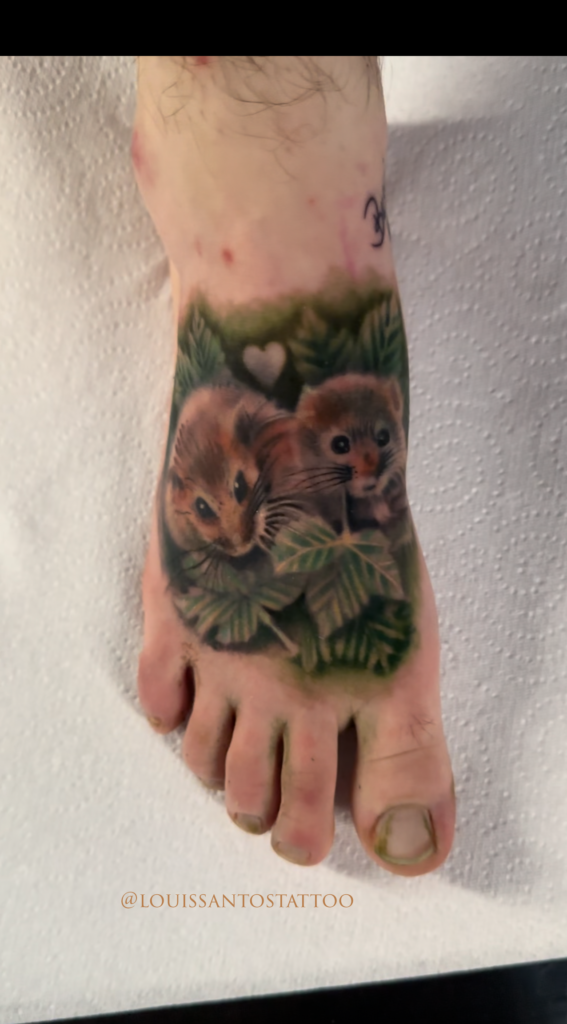
Realistic Femine Mice Tattoo

Leeds Tattoo Artist

I was requested to tattoo 2 mice on the foot, i was a bit worried about it as, the was a lot going on for such a small area to tattoo, however, the client, she was very patient, so i let her know, how much i needed to take my time in order to make the tattoo work, and as she accepted and undestood that, i was happy to go ahead with the request. We were happy with the end result, and she came back in the end for a touch up session, which it made me sure, if she wanted another tattoo, i would be happy to help. Tattooing is not only about tattooing, is about energy too, a good vibe is very important, so having aconsultation is very important. Tattoo artists, we want to work in a good frame of mind, and in order to work with a good frame of mind, the energy has to be right. Thats why if youy meet someone, and the energy is tense, and the energy is off, do not go ahead with tattooing.
 
Mice are small mammals belonging to the order Rodentia and the family Muridae. They are known for their small size, pointed snouts, rounded ears, and long, hairless tails. Here are some key facts about mice:
 
1. Species Diversity: There are numerous species of mice found worldwide, with the house mouse (Mus musculus) being one of the most common and widespread. Other species include the deer mouse, field mouse, and wood mouse, among others.
 
2. Habitat and Distribution: Mice inhabit a wide range of environments, including forests, grasslands, and urban areas. They can be found on every continent except Antarctica, adapting to diverse climates and ecosystems.
 
3. Diet: Mice are omnivorous, feeding on a variety of food sources. Their diet typically consists of seeds, grains, fruits, insects, and small invertebrates. However, house mice are known for their scavenging abilities and can adapt to consuming human food scraps if available.
 
4. Reproduction: Mice reproduce rapidly, with females capable of having several litters in a single year. The gestation period is relatively short, lasting around three weeks. A litter can consist of several pups, and they reach sexual maturity quickly, often within a couple of months.
 
5. Behavior: Mice are primarily nocturnal creatures, being more active during the night. They have excellent hearing and a keen sense of smell, which helps them navigate their environment and locate food. Mice are agile climbers and can squeeze through small openings due to their flexible skeletons.
 
6. Role in Ecosystems: Mice play important roles in ecosystems as both prey and seed dispersers. They are a food source for predators such as snakes, birds of prey, and carnivorous mammals. Additionally, mice aid in seed dispersal by consuming plant seeds and carrying them to new locations.
 
7. Relationship with Humans: While mice can be considered pests when they infest homes or damage crops, they have also contributed significantly to scientific research. Mice are commonly used in laboratory studies due to their genetic similarities to humans and their short breeding cycles.
 
Click link bellow for youtube video, and to follow me on Instagram.


Egyptian Mythology Tattoo Leeds

I am currently exited to work with this Egyptian Mythology related Tattoo. When he approached me, he had started the tattoo, with another artist, however, i was happy he listened to my advice, to bring the tattoo to life, and have a clearer head in the tattoo. So this is a cover-up Tattoo from his previous work. Egyptian Mythology Tattoos is a style im specialising at the moment, im also drawing new ideas related to Egyptian, Greek Mythology and Vikings, im currently working on a large Viking Warrior tattoo on my customers leg, i will be uploading it, in a few weeks here on this web site, so keep an eye for updates. The Egyptians fascinated me, with their spirituality and perspective about life. Click on link bellow for you tube video, and the link after that, to follow my Instagram page, Thank you.

Black and grey Tattoo Sleeve Leeds

Owl Tattoo and Wolf Tattoo in black and grey, half sleeve tattoo Leeds

It was a pleasure working on this black and grey half sleeeve tattoo. i was quiet lucky with this one, as my client gave me total freedoom to express myself in his tattoo, thats why he received an unique tattoo just for him. Before get tattooed by someone, make sure to check their work, and come to a decision that, their style is what you want in your body for the rest of your life, so making that decision, you should not have a doubt that, the Tattoo Artist in Leeds of your choice,  is not capable to do the tattoo you are looking for. That will give your artist more confidence, before tattooing you, therefore, you will get a more confidence and better tattoo. If you wish to see the free hand video on youtube and end result, click in the  button below. Thank you

Black and Grey Tattoo Artist in Leeds

Realism black and grey Tattoo artist in Leeds

Tattoo Studio in Leeds

Realism Black and grey specialist Tattoo Studio in Leeds. This wild life leg sleeve was a big project i had the opportunity to work with Ken. Ken was a very patiente and true gentleman. I believe, you tattoo will be based on you attitude. Usually patient people have the best quality tattoos as they allow the artist to work with a good frame of mind, they have faith in the process, and are about the end result and not how long the tattoo is going to take. Click in the link bellow to see You Tube video, Thank you.

Black and grey Tattoo Artist Leeds

Realism Black and Grey Tattoo Artist

Black and grey Tattoo, half sleeve complete. Clock, rose, and swallow. This half sleeve was most part free hand, apart from the clock, free handing, it allows me to follow the customers body, and deliver a clean and flowing to the body tattoo. Every Tattoo, it requires human body flow, and the only way to make the Tattoo flow with the body is by applying a foundation drawing knowladge to the human body, and a lot of practise on the drawing board. This half sleeve is half healed and half fresh. Really looking forward to see whats coming next.

  • Book your tattoo