
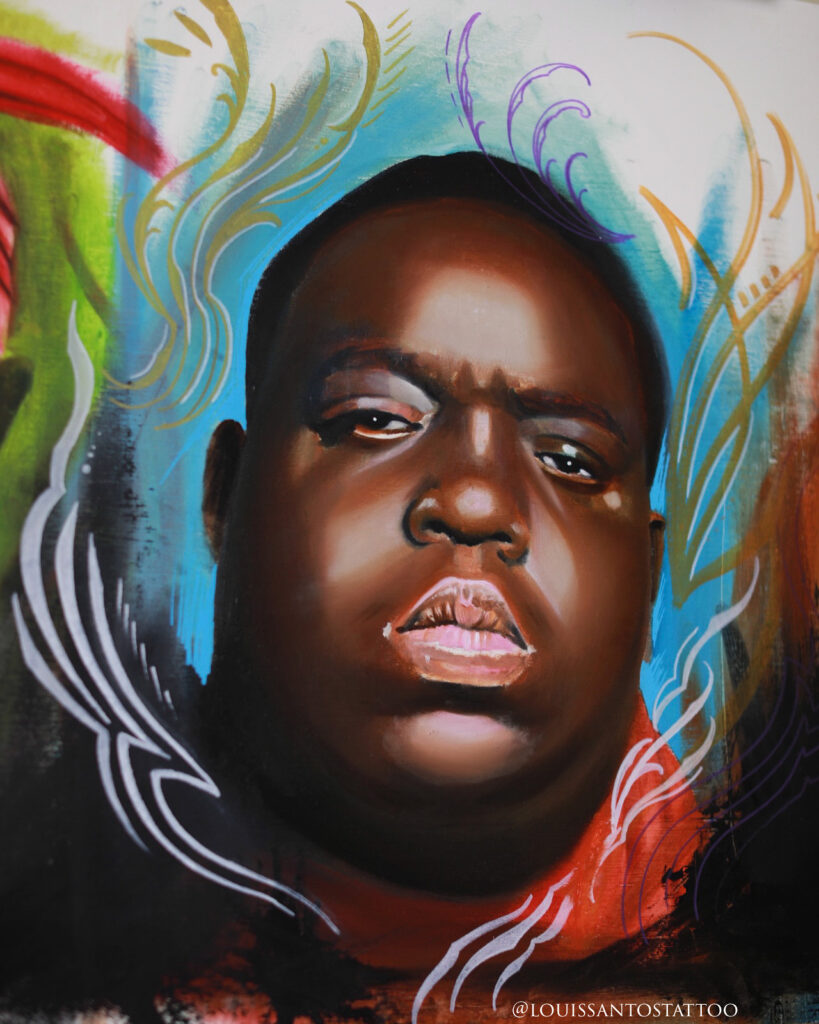
i had a lot of fun with Notorious BIG. I was inspired by his Netflix documentary. I love doing oil on board, the oils are very relaxing and the board is my favourite type of canvas to work on. More portraits to come, thank you


i had a lot of fun with Notorious BIG. I was inspired by his Netflix documentary. I love doing oil on board, the oils are very relaxing and the board is my favourite type of canvas to work on. More portraits to come, thank you

I loved working on this Rhino realistic Tattoo. It was his first tattoo and I was very impressed with how much he wanted to invest time and patience to his tattoo. I was happy to take the request as lately I have been focusing on realism, Greek mythology and Egyptian related art and tattoos. So I’m having fun with this journey and let’s see where this is going to take us. Thanks for looking

I have been tattooing Preeyesh for a while, and when he requested for this images of Kali Maa, I was over the moon with the request, definitely my kind of image, detailed and dramatic. We are currently working on his other arm, so many more ides to come, thanks for checking it out.

Poseidon Greek Mythology Tattoo. I have been exited about creating new images to my clients of Greek Mythology related art or Egyptians related tattoos. These two worlds re really keeping me inspired at this moment. Thank you for looking.
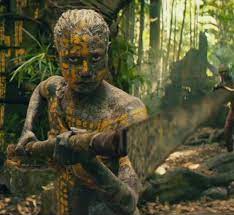
The book Mutilating the Body: Identity in Blood and Ink by Kin Hewitt reminded me of the indigenous people who tattoo or paint themselves all over the body in the King Kong movie in 2017 (see image 1, 2, and 3). Before I watched the movie, I have never visualized those tattooed individuals who wish to protect themselves from predators. Neither have I thought about their fear, the creatures they had to combat in order tostay alive and the hardships they endured. For them, every living day is a battle for their own life. I guess one of the beauties of the movie industry is to bring history to life so while we are watching these moving pictures, in a sense, we are living in a period of history ourselves.
One of the highlights of the movie is definitely the production of those massive creatures and in comparison to them, humans are so trivial and fragile. When you are drinking water by the river, or resting in the forest, a giant gorilla or a fast-moving lizard will come in front of you and you can only pray for your life. Roche Carcel (2021) states that “humans die, precisely, because they are Nature and, therefore, they are religious”, and from this quote we can see that the fear of death that originates from the hostile nature gives birth to religion. Russell (2004) also holds the opinion that “fear of nature is what has given rise to religion and fear is the basis of religious dogma, as of so many things in human life.” In addition to the belief of gods, the cult of the dead (Otto, 1996) is also originated; not only do ancient people pray to gods, they also want protection from their dead ancestors. Nevertheless, to them, every death announces a birth and the cycle of human life is the natural cycles of death-rebirth (Roche Carcel, 2021).
Apart from seeking gods for help, those indigenous people also colour themselves though the reasons are not specified in the movie. According to Hewitt (1997), the markings on the bodies is not only the most ancient art form but the oldest practice of religion. The symbols and motifs are believed to be able to protect the wearers from evil spirits and feral animals (Hewitt, 1997). In addition, they also serve as a sacred gateway which connects humans with spirits and gods during rituals (Hewitt, 1997). This viewpoint is also evident in the book Ancient Ink: The Archaeology of Tattooing done by Lars Krutak and Aaron Deter-Wolf. In ancient times, before the development of systematic written languages, and the construction of churches, religion is actually written all over the bodies (Hewitt, 1997). However, the ideology of the spiritual function of the body are mostly equivalent to superstitions and primitive magic nowadays after the post-Enlightment (Hewitt, 1997).
“Animists attribute spiritual existence to all people, plants, animals and inanimate objects
And recognise a web of physical and psychic connections between all of these entities.
These conncections allow believers to ascribe powerful magical properties to objects
that resemble each other or have been in contact with a potent object or person.”
(Hewitt, 1997).
Hewitt argues that animists’ powerful belief connects humans with the world and there is no separation between mind and body, therefore, body is a visual representation of mind. When a person is coloured, he or she is no longer recognised as a human, but a connector to unworldly dimensions (Hewitt, 1997). The effects can influence the audience in the ritual as well as the masked person and they can invoke strong emotional and aesthetic responses (Hewitt, 1997).
Besides the spiritual and the religious aspects of the markers on bodies, the cultural impact is not supposed to be ignored. Tattoos give the wearer a new valued identity in his or her community which represents his or her new social status. For example, it is evident in the movie that the two prestigious elders are painted in blue while others are covered in yellow ink. It is worth noticing that the identity, the group and the exclusion of other are also generated by religion (Roche Carcel, 2021). By dramatizing the action of marking and getting tattoos, the gesture itself becomes sacred and the meaning is produced (Eliade, 1952; Roche Carcel, 2021). In that sense, religion establishes a practical instrument of control and the renew of the individuals in addition to the society (Roche Carcel, 2021). Furthermore, the patterns in ancient times can be considered as art in modern society (Hewitt, 1997). Freud believes that art can provoke emotional effects that incur “magical” consequences and art did not begin as art for art’s sake, but worked originally in the service of impulses (cited in Hewitt, 1997). As a result, from a social/artistic point of view, these tattoo motifs document a piece of history more powerful than what we can actually see today. One last point, Carse (1987) says that “death perceives as a discontinuity, is not the one that steals its meaning from life, but the one that makes its greater intensity possible.”
The book Mutilating the Body: Identity in Blood and Ink by Kin Hewitt reminded me of the indigenous people who tattoo or paint themselves all over the body in the King Kong movie in 2017 (see image 1, 2, and 3). Before I watched the movie, I have never visualized those tattooed individuals who wish to protect themselves from predators. Neither have I thought about their fear, the creatures they had to combat in order tostay alive and the hardships they endured. For them, every living day is a battle for their own life. I guess one of the beauties of the movie industry is to bring history to life so while we are watching these moving pictures, in a sense, we are living in a period of history ourselves.
One of the highlights of the movie is definitely the production of those massive creatures and in comparison to them, humans are so trivial and fragile. When you are drinking water by the river, or resting in the forest, a giant gorilla or a fast-moving lizard will come in front of you and you can only pray for your life. Roche Carcel (2021) states that “humans die, precisely, because they are Nature and, therefore, they are religious”, and from this quote we can see that the fear of death that originates from the hostile nature gives birth to religion. Russell (2004) also holds the opinion that “fear of nature is what has given rise to religion and fear is the basis of religious dogma, as of so many things in human life.” In addition to the belief of gods, the cult of the dead (Otto, 1996) is also originated; not only do ancient people pray to gods, they also want protection from their dead ancestors. Nevertheless, to them, every death announces a birth and the cycle of human life is the natural cycles of death-rebirth (Roche Carcel, 2021).
Apart from seeking gods for help, those indigenous people also colour themselves though the reasons are not specified in the movie. According to Hewitt (1997), the markings on the bodies is not only the most ancient art form but the oldest practice of religion. The symbols and motifs are believed to be able to protect the wearers from evil spirits and feral animals (Hewitt, 1997). In addition, they also serve as a sacred gateway which connects humans with spirits and gods during rituals (Hewitt, 1997). This viewpoint is also evident in the book Ancient Ink: The Archaeology of Tattooing done by Lars Krutak and Aaron Deter-Wolf. In ancient times, before the development of systematic written languages, and the construction of churches, religion is actually written all over the bodies (Hewitt, 1997). However, the ideology of the spiritual function of the body are mostly equivalent to superstitions and primitive magic nowadays after the post-Enlightment (Hewitt, 1997).
“Animists attribute spiritual existence to all people, plants, animals and inanimate objects
And recognise a web of physical and psychic connections between all of these entities.
These conncections allow believers to ascribe powerful magical properties to objects
that resemble each other or have been in contact with a potent object or person.”
(Hewitt, 1997).
Hewitt argues that animists’ powerful belief connects humans with the world and there is no separation between mind and body, therefore, body is a visual representation of mind. When a person is coloured, he or she is no longer recognised as a human, but a connector to unworldly dimensions (Hewitt, 1997). The effects can influence the audience in the ritual as well as the masked person and they can invoke strong emotional and aesthetic responses (Hewitt, 1997).
Besides the spiritual and the religious aspects of the markers on bodies, the cultural impact is not supposed to be ignored. Tattoos give the wearer a new valued identity in his or her community which represents his or her new social status. For example, it is evident in the movie that the two prestigious elders are painted in blue while others are covered in yellow ink. It is worth noticing that the identity, the group and the exclusion of other are also generated by religion (Roche Carcel, 2021). By dramatizing the action of marking and getting tattoos, the gesture itself becomes sacred and the meaning is produced (Eliade, 1952; Roche Carcel, 2021). In that sense, religion establishes a practical instrument of control and the renew of the individuals in addition to the society (Roche Carcel, 2021). Furthermore, the patterns in ancient times can be considered as art in modern society (Hewitt, 1997). Freud believes that art can provoke emotional effects that incur “magical” consequences and art did not begin as art for art’s sake, but worked originally in the service of impulses (cited in Hewitt, 1997). As a result, from a social/artistic point of view, these tattoo motifs document a piece of history more powerful than what we can actually see today. One last point, Carse (1987) says that “death perceives as a discontinuity, is not the one that steals its meaning from life, but the one that makes its greater intensity possible.”

I have been working with Gareth for a while, however, when he asked me for a horror sleeve I was really happy with the request. We have worked on a colour portrait of Chucky, I didn’t want to get an image from google, so I watched the movie, and was happy when Chucky was in a snow scene, I liked the way it looked, so did Gareth. I’m happy to take movie related tattoos, it doesn’t have to be horror as I love any portraits out of movies, thank you Gareth

Tattooing Ariane was such a good experience, she is very patient and has a good attitude. We previously worked on a realistic lioness on inside of her forearm, and then I was happy when she requested more realism work. She requested a humming bird with Caribbean flowers, and as I felt comfortable with her, I free handed the whole process and we were both happy with the end result. Thank you so much Ariane.
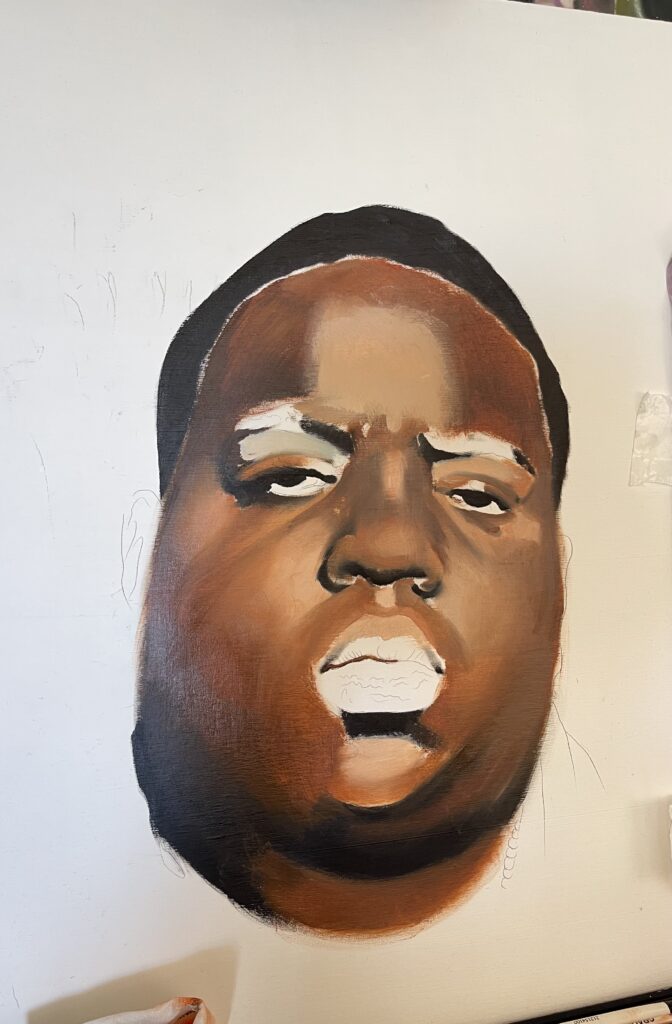
Working in progress of this oil on board of Notorious BIG, I have been working on. I loved the series on Netflix, that’s what inspired me to work on this oil painting. I must admit, I wasn’t a big fan of Notorious BIG when o first heard his music, however Joe listened to it so many times on the studio that it grew in to me, now I love his music. Thank you for checking it out, I will be uploading an image of the finished painting.

Full completion of Andy’s full sleeve Japanese in colour. Thank you Andy you are such a patience guy who never looses the faith required to achieve a full sleeve. Thank you

I have been Tattooing Andy for around 5 years now. First we worked on a big dragon on his front, as his first tattoo, he was awesome all the way through, we needed a lot of patience, as the front is quiet sensitive, so we had to do small sessions. However me and Andy got on so well, that those small sessions just flew by. After that, Andy asked me to get his full sleeve tattoo, he requested a full sleeve with a coy and a lotus flower around it. Tattooing Andy is an experience to remember, as we talk about deep stuff, he’s really open minded about anything I say, and that makes me at ease to work with him. Thank you Andy, you are the best.