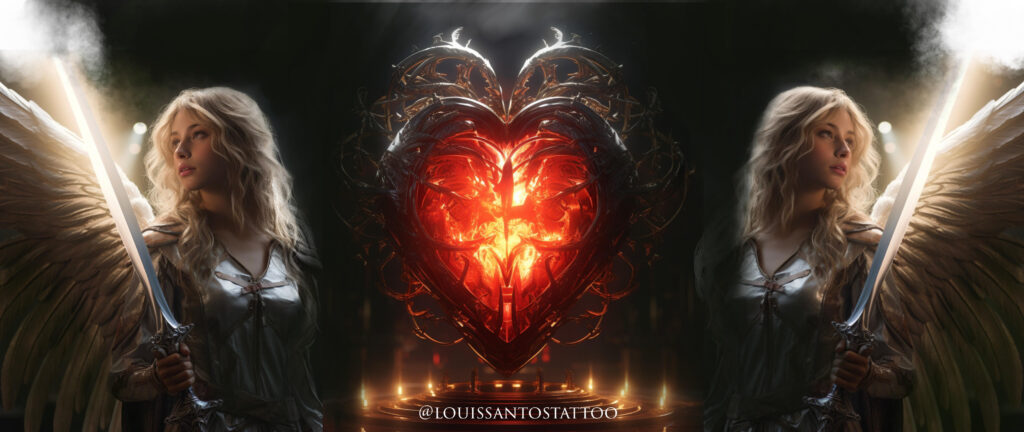
Angel Religious Tattoo Idea

Tattoo Studio Leeds

Tattoo Artist Leeds

Being a creative tattoo artist is an art form that requires a unique blend of skill, creativity, and empathy. At its core, tattooing is more than just inking skin; it’s a form of personal expression and storytelling, both for the artist and the client. Every tattoo is a collaboration, a dance of ideas and visions, resulting in a piece that’s both a work of art and a deeply personal symbol. The first step in this creative journey is understanding the client’s desires and motivations. A good tattoo artist listens attentively, not only to grasp what the client wants visually but also to comprehend the emotional and personal significance behind the tattoo. This understanding is crucial because a tattoo often represents a milestone, a memory, or a personal belief. Once the artist grasps the client’s vision, the creative process begins. This is where the artist’s skills and creativity come into play. Unlike other art forms, tattooing is unique because the canvas is the human body. This requires a deep understanding of anatomy, as the curvature and texture of skin can affect the tattoo’s appearance. A creative tattoo artist knows how to adapt their design to fit the body’s contours, enhancing its aesthetic appeal. Moreover, a creative tattoo artist constantly evolves their style and technique. They stay updated with the latest trends, tools, and techniques in the tattooing world. However, they also maintain a unique artistic voice. This balance between trend-awareness and individuality is what sets a remarkable tattoo artist apart. Safety and hygiene are also paramount. A responsible artist ensures that their workspace and tools are sterilized, and they follow all health guidelines. This not only protects the client but also reflects the artist’s professionalism. Furthermore, a creative tattoo artist is also a guide. They help clients through the process, especially those getting their first tattoo. They provide clear instructions on aftercare, ensuring the tattoo heals properly and retains its beauty over time. In the realm of design, creativity knows no bounds. Whether it’s a traditional, realistic, abstract, or custom design, a creative tattoo artist brings a unique flair to each piece. They may mix styles or invent new techniques to create a tattoo that’s truly one-of-a-kind. Collaboration remains a key element. Some of the best tattoo designs come from a synergy of ideas between the artist and the client. It’s this partnership that often leads to the most meaningful and stunning tattoos. In conclusion, being a creative tattoo artist is about more than just technical skill. It’s about connecting with clients, understanding their stories, and bringing their visions to life in a way that’s safe, professional, and deeply personal. It’s a fulfilling journey that combines art, empathy, and continuous learning to create lasting impressions on both skin and heart.


Tattoo Artist Leeds Louis Santos

Angel Half Sleeve Tattoo Idea

Tattoo Artist Leeds

Leeds Tattoo Studio

Angels, ethereal beings found in various religions and mythologies, are often depicted as messengers of the divine, embodying purity, love, and guidance. In Christianity, angels are seen as God’s servants, with notable figures like Gabriel and Michael taking center stage in biblical narratives. Their roles vary from guardians to warriors, and they are often associated with the divine plan and human affairs. Angel tattoos, a popular choice in body art, symbolize different things for different people. For some, they represent protection and guardianship, echoing the belief in guardian angels who watch over and guide individuals. For others, these tattoos are a tribute to loved ones who have passed away, symbolizing a connection that transcends the physical world. The imagery of an angel can also embody hope, faith, and the triumph of good over evil. The design of angel tattoos can vary greatly. Some choose to depict angels in a traditional, religious sense, with flowing robes, halos, and wings. These designs often carry a sense of serenity and grace. Others may opt for a more modern or abstract representation, focusing on elements like wings or a halo to symbolize the angelic aspect. In some designs, angels are portrayed in a battle stance, representing strength, resilience, and the fight against adversity. The placement of an angel tattoo can also hold significance. A tattoo on the back, with wings spanning across the shoulder blades, can represent freedom and the idea of being guided or lifted by divine forces. Smaller, more discreet angel tattoos might be chosen as a personal reminder of faith and inner strength, often placed in areas that are not always visible to others. Culturally, angel tattoos have been embraced by various groups and individuals. They can be seen as a form of spiritual expression, a way to visually communicate one’s beliefs and values. In the arts, angelic figures have been a source of inspiration for centuries, and this extends into the realm of body art. The depiction of angels in tattoos can also be influenced by cultural interpretations of these celestial beings, with variations seen across different societies. In the realm of psychology, the choice to get an angel tattoo might be analyzed as a manifestation of one’s inner desires and beliefs. It could represent a longing for protection, a connection with a higher power, or a way to express grief and remembrance. The process of choosing and getting a tattoo can also be a form of self-expression and identity formation, with the individual aligning themselves with the qualities they believe angels represent. In conclusion, angels and angel tattoos hold a deep and varied significance across cultures and individuals. These tattoos are more than just aesthetic choices; they are often deeply personal symbols of faith, hope, protection, and remembrance. Whether depicted in traditional religious imagery or through more abstract designs, angel tattoos offer a way for individuals to express their innermost beliefs and values in an artful and meaningful manner.
 
Click link bellow to follow me on Instagram.
 
Thank you


Tattoo Artist Leeds Louis Santos

Angel Digital Art

Leeds Tattoo Artist

Digital art has undeniably revolutionized the world of art in recent years, impacting various creative fields, including the tattoo industry. This transformation has been driven by technological advancements, changing artistic paradigms, and shifts in consumer preferences. In this 600-word exploration, we will delve into how digital art has taken over the art world and examine its profound influence on the tattoo industry. The Rise of Digital Art: Digital art’s ascendancy can be attributed to several factors. Firstly, the accessibility of digital tools has democratized the creation of art. With the proliferation of powerful and affordable digital drawing tablets, software, and online platforms, anyone with an artistic inclination can try their hand at creating digital masterpieces. This democratization has expanded the pool of artists, fostering innovation and diversity within the art world. Secondly, digital art offers unparalleled flexibility and convenience. Artists can easily experiment with various styles, techniques, and color palettes without the constraints of physical mediums. Mistakes can be undone with a simple keystroke, encouraging exploration and risk-taking. This has led to the emergence of new art forms and styles that may not have been feasible with traditional tools. The Influence on the Tattoo Industry: The tattoo industry has been significantly impacted by the rise of digital art. Tattoo artists, traditionally reliant on paper sketches and hand-drawn designs, now have access to digital tools that streamline the design process. They can create intricate, precise designs with ease, allowing for greater customization and collaboration with clients. One of the most profound effects is the ability to create highly detailed and realistic tattoo designs. Digital art enables tattoo artists to create photorealistic portraits, intricate geometric patterns, and detailed illustrations that were challenging to achieve with traditional techniques. This level of detail has expanded the possibilities for tattoo artistry, pushing the boundaries of what can be permanently inked onto the skin. Moreover, the collaboration between tattoo artists and clients has been enhanced through digital art. Clients can provide reference images, make adjustments in real-time, and visualize the final tattoo design before it becomes permanent. This interactive process ensures that clients are more satisfied with the end result, reducing the risk of regrets or miscommunication. Another significant impact is the globalization of tattoo artistry. Digital platforms and social media have enabled tattoo artists to share their work with a global audience. Artists from different corners of the world can inspire and influence each other, leading to the fusion of various artistic styles and cultural influences. This cross-pollination has enriched the tattoo industry, resulting in a broader range of designs and techniques. Furthermore, digital art has changed the marketing and business aspect of the tattoo industry. Tattoo parlors can showcase their artists’ digital portfolios online, attracting a broader clientele and helping clients make informed choices. Social media platforms have become invaluable tools for tattoo artists to promote their work and connect with potential clients, creating a global marketplace for tattoo artistry. In conclusion, digital art has undeniably taken over the world of art, and its impact on the tattoo industry has been transformative. The accessibility, flexibility, and collaborative nature of digital art have elevated the quality and diversity of tattoo designs. Moreover, it has enabled global connections, cross-cultural influences, and effective marketing strategies that have propelled the tattoo industry into a new era of creativity and innovation. As digital art continues to evolve, we can expect even more exciting developments in the world of tattoos, pushing the boundaries of what is possible in this ancient art form.

Leeds Tattoo Studio

Guardian Angel, Sacred heart, Digital art

Tattoo Studio Leeds

The intersection of artificial intelligence (AI) and art is an intriguing and transformative realm that has the potential to reshape the creative landscape. In this 1000-word exploration, we will delve into how AI could affect art, including the generation of artwork, the creative process, artistic collaboration, and the impact on artistic expression and appreciation.
 
One of the most significant ways AI is influencing art is through the creation of artwork itself. AI algorithms, such as generative adversarial networks (GANs) and deep learning models, have been employed to generate original pieces of art. By training on vast datasets of existing artwork, these algorithms can learn patterns, styles, and compositions, and then generate entirely new and unique images, paintings, or sculptures.
 
This AI-generated art raises intriguing questions about the nature of creativity and authorship. While some argue that true creativity can only stem from human imagination and emotion, others view AI-generated art as a collaboration between human and machine, where the artist guides and curates the AI’s output. This blending of human and AI creativity challenges conventional notions of what it means to be an artist and opens up new avenues for artistic exploration.
 
Moreover, AI can assist artists in the creative process itself. Machine learning algorithms can analyze vast amounts of data, including images, texts, and music, to provide inspiration and generate ideas. AI tools can suggest color palettes, compositions, or even generate rough sketches based on specific criteria or artistic styles. This augmentation of human creativity with AI assistance can enhance the artist’s workflow and stimulate new directions in their artistic practice.
 
AI also enables unprecedented collaborations between artists and machines. Artists can leverage AI algorithms to create interactive installations, performances, or immersive experiences. For example, AI-powered systems can respond to audience input or environmental data, creating dynamic and adaptive artworks. This fusion of human creativity and AI’s computational power can push the boundaries of artistic expression and engage viewers in novel and unexpected ways.
 
Additionally, AI has the potential to revolutionize the art industry by enhancing art curation, recommendation systems, and personalized experiences. AI algorithms can analyze vast art databases, learn individual preferences, and provide tailored recommendations to art enthusiasts. Museums and galleries can employ AI to optimize exhibition layouts, predict visitor engagement, or even create virtual art experiences that transcend physical limitations.
 
However, the integration of AI into the art world is not without its challenges and ethical considerations. One concern is the potential loss of human touch and the personal, emotional connection between the artist and their artwork. While AI can generate visually stunning pieces, it may lack the depth and emotional resonance that comes from human experiences and narratives.
 
Moreover, the accessibility and democratization of AI-generated art raise questions about originality, copyright, and intellectual property. As AI algorithms learn from existing artworks, there is a risk of unintentional plagiarism or reproducing derivative works. Addressing these ethical concerns requires careful consideration and the development of legal frameworks to protect the rights of artists, whether human or AI-assisted.
 
Despite these challenges, the integration of AI in art offers exciting opportunities for innovation and exploration. It pushes artists to reconsider their creative processes, collaborate across disciplines, and explore new frontiers of expression. The fusion of human imagination and AI’s computational capabilities can unlock novel artistic visions and challenge traditional boundaries.
 
In conclusion, AI’s impact on art is multifaceted and transformative. From AI-generated artworks to assisting artists in the creative process, enabling collaborations, and enhancing art experiences, AI is reshaping the artistic landscape. While ethical considerations and challenges persist, the integration of AI in art holds immense potential to inspire, provoke, and expand the horizons of human creativity.


Black and grey Angel Tattoo

Tattoo Artist West Yorkshire

It was a pleasure working on this black and grey cherub tattoo. It was a memorial Tattoo for Jose, so a lot of meaning attached to it. I did a YouTube video where I explained in more detail about the process. Click button bellow for you tube video, and following link to follow me on you tube, Thank you for your visit. 

Archangel Michael black and grey

I have been doing a lot of black and grey tattoos lately, tattooing and drawing, having a lot of fun with it. I tried to do my own version of Archangel Michael, this could be a start of an idea for a full sleeve of Angels, I will get to draw some more, it would be fun to being some of them to life in the drawing. A black and grey sleeve of angels would look pretty cool, I have not done one for a while, it’s on the waiting list.

Angel Sketch Book

Sometimes a simple sketch is satisfying to do, I usually add a lot of shading to my drawings, to give a realistic feel to it. However, illustration is the focus on the foundation shape, which it forms and enriches the basic shapes of real life or fantasy images. Usually when I tattoo angels, I make the most to use the angel wing to follow the customer body shape.
  • Book your tattoo