Barbarella Half Sleeve Tattoo Leeds
Tattoo Artist Leeds

Leeds Tattoo Artist

Lorem ipsum dolor sit amet, consectetur adipiscing elit. Ut elit tellus, luctus nec ullamcorper mattis, pulvinar dapibus leo.

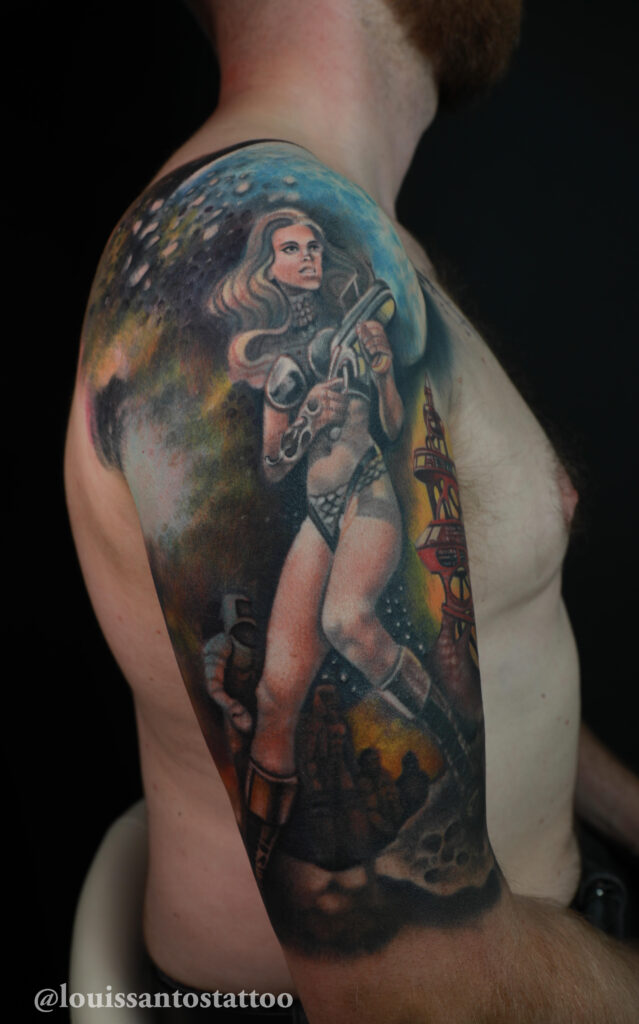
It was a pleasure Tattooing this half sleeve tattoo, in our tattoo studio in Leeds, from a classic 60’s movie. My client was really into retro movies. As i like to get in to what the client wants to get tattooed, i was sure to watch the movie, to get in to the vibe before doing the tattoo. Jane Fonda really makes you be a fan of 60’s pin-ups, after watching Barbarella. Her natural looks, makes you realise what real beauty really is, back in the 60’s, everyone was so natural looking, and what you were thats what you got.

Click link bellow to visit me on Instagram.

Butterfly skull Tattoo

Leeds Tattoo Artist

Butterfly Skull Tattoo done a few years ago. Its amazing to go back to my tattoos from a few years ago, and that is one for sure i still love. Not only for the tattoo, but for the friendship that i built with Martin. Martin has been part of our family in our tattoo studio in Leeds , we have spent many hours talking about football and F1. He has helped many times with printing t-shirts and bussiness cards. He has a company called “Digital Panther” worth looking at, if you are looking for signs and print in general. Thank you Martin for being such a cool client for us over the years, you deserve all the sucess in the world.

Tattoo Artist Leeds

Egyptian Tattoo Leeds

Tattoo Studio Leeds

Leeds Tattoo Studio

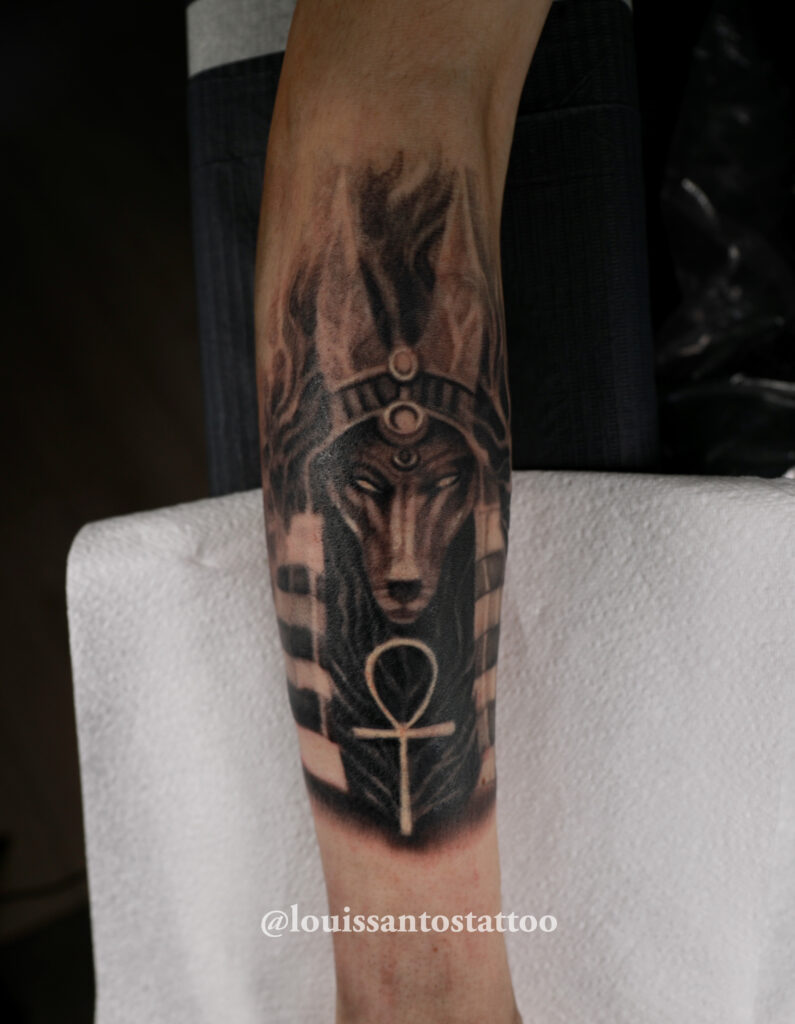
Egyptian mythology Tattoos is a rich and intricate belief system that played a central role in the lives of ancient Egyptians for millennia. Rooted in the religious practices and stories of this ancient civilization, Egyptian mythology provided a framework for understanding the world, the afterlife, and the divine. At the heart of Egyptian mythology were the gods and goddesses, each with their unique characteristics and domains. The pantheon included well-known deities like Ra, the sun god, who was believed to journey across the sky each day, and Osiris, the god of the afterlife and resurrection. Isis, Osiris’ wife and sister, played a crucial role in his resurrection and was revered as a symbol of maternal care. One of the most fascinating aspects of Egyptian mythology was its intricate cosmology. Egyptians believed in a complex cosmological order where the physical world and the divine realm were interconnected. The Nile River, for instance, was seen as a reflection of the Milky Way, symbolizing the bridge between the earthly and celestial realms. The concept of the afterlife was central to Egyptian mythology. The belief in an eternal journey beyond death was ingrained in their culture, and elaborate funeral rituals were performed to ensure a safe passage to the afterlife. The Book of the Dead, a collection of spells and instructions, guided the deceased through the challenges they would face in the afterlife. Animals also held a special place in Egyptian mythology, with many gods and goddesses associated with specific animals. The falcon-headed god Horus, for instance, symbolized protection and kingship, while the cat goddess Bastet represented home and fertility. Pyramids, monumental tombs for pharaohs, were not just architectural wonders but also a manifestation of Egyptian mythological beliefs. They were constructed to align with the cardinal points and served as a means to facilitate the pharaoh’s journey to the afterlife. While Egyptian mythology was deeply ingrained in their society, it evolved over thousands of years, adapting to changes in rulers and external influences. Despite its eventual decline with the rise of Christianity and Islam, elements of Egyptian mythology continue to captivate the modern world, as they offer a glimpse into the beliefs and values of one of history’s most enduring civilizations.
 
Click link bellow for You Tube Video, Instagram page and Facebook
 
Thank you


Portrait Tattoo Leeds

Leeds Portrait Tattoo Artist

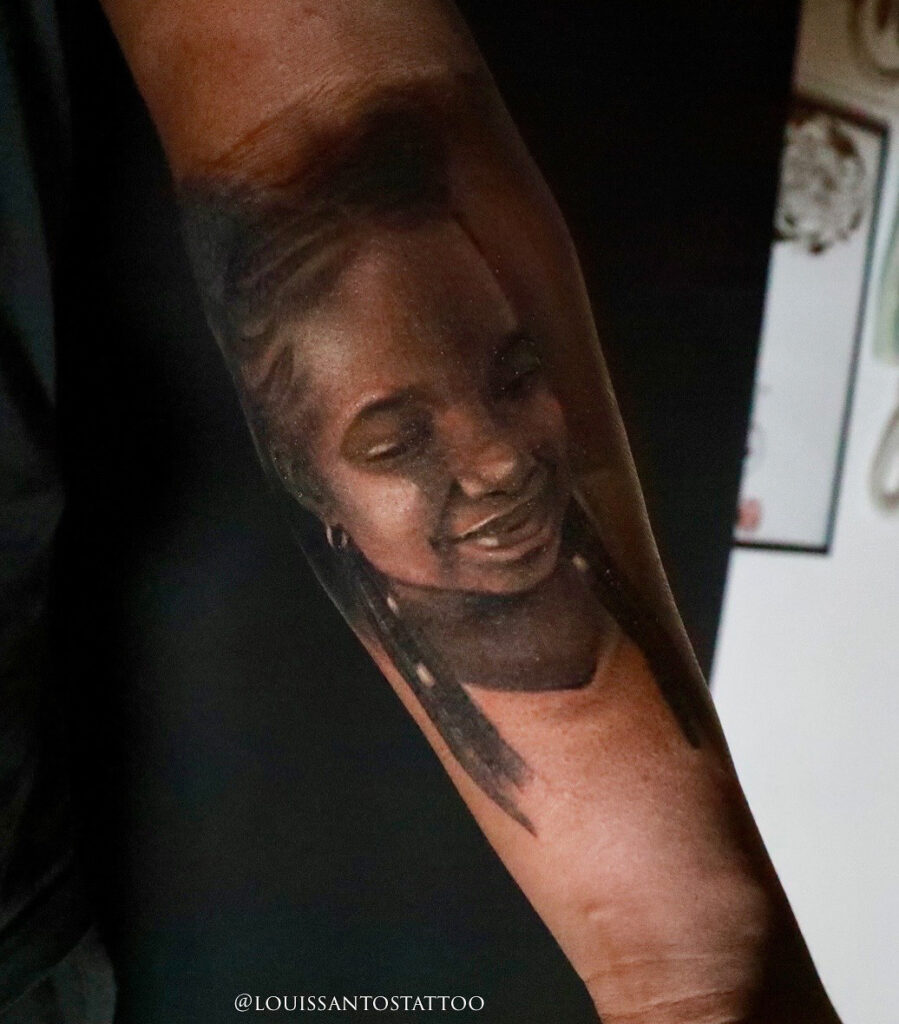
Approaching a Portrait Tattoo Artist in Leeds, and Mastering the Art of Portrait Tattooing Portrait tattoos are a unique and captivating form of body art, allowing individuals to immortalize loved ones or pay homage to their idols on their skin. However, achieving a high-quality portrait tattoo requires dedication, skill, and the right approach when working with a portrait tattoo artist. In this 600-word guide, we will delve into the steps you can take to best approach a portrait tattoo artist and how to develop the necessary skills to excel in portrait tattooing. 1. Research and Choose the Right Artist: The first step in approaching a portrait tattoo artist is to research and select the right professional. Look for artists with a strong portfolio of portrait tattoos that showcase their expertise in capturing intricate details, shading, and likeness. Reading reviews and asking for recommendations from friends or online tattoo communities can help you identify reputable artists. 2. Schedule a Consultation: Once you’ve identified a potential artist, reach out to them to schedule a consultation. During this initial meeting, discuss your ideas, the size, placement, and any specific details you want in your portrait tattoo. Be open to the artist’s suggestions and input, as they have valuable experience in translating your vision into a successful tattoo. 3. Provide Clear Reference Materials: To ensure your portrait tattoo accurately represents the subject, provide clear and high-quality reference photos to the artist. Multiple angles, lighting variations, and close-ups can aid the artist in capturing every detail. If the tattoo is of a loved one, sharing personal stories and anecdotes can help the artist connect with the subject’s personality. 4. Trust the Artist’s Expertise: While it’s essential to communicate your preferences, remember that portrait tattoo artists are experts in their craft. Trust their judgment when it comes to color choices, composition, and the overall design. They understand how to adapt the image to the unique canvas of your body. 5. Be Patient and Allow Creative Freedom: Creating a portrait tattoo is a time-intensive process, and achieving perfection takes time. Be patient and trust the artist’s timeline. It’s also crucial to allow some creative freedom, as artists may need to make minor adjustments to ensure the tattoo looks its best on your skin. 6. Pay Attention to Tattoo Aftercare: Once your portrait tattoo is complete, following proper aftercare instructions is crucial. The artist will provide you with guidelines on how to care for your tattoo during the healing process. This includes keeping the area clean, avoiding direct sunlight, and refraining from picking at scabs to ensure the tattoo heals beautifully. 7. Develop Your Drawing Skills: If you aspire to become a portrait tattoo artist yourself, dedicating time to honing your drawing skills is essential. Practice drawing portraits regularly, paying close attention to capturing facial features, expressions, and shading techniques. Study anatomy to understand how the human face is structured. 8. Learn Tattooing Techniques: To be able to tattoo portraits, you must become proficient in the art of tattooing itself. This involves learning how to use tattoo machines, needles, and inks, as well as understanding the different techniques for shading and outlining. Consider enrolling in a reputable tattoo apprenticeship program to receive hands-on training from experienced artists. 9. Gain Experience and Build a Portfolio: As you develop your tattooing skills, work on building a portfolio of your work. Start with simpler designs and gradually progress to more complex portraits as your confidence grows. Share your portfolio with potential clients and seek feedback from established artists to improve your craft. 10. Maintain a Strong Work Ethic: Becoming a skilled portrait tattoo artist requires unwavering dedication and a strong work ethic. Be prepared to invest long hours, continuously seek improvement, and stay up-to-date with industry trends and techniques. In conclusion, approaching a portrait tattoo artist and mastering the art of portrait tattooing involves a combination of careful research, effective communication, trust in the artist’s expertise, and dedication to developing your skills. Whether you’re getting a portrait tattoo or aspiring to become a portrait tattoo artist, following these steps will help you achieve remarkable results and create lasting works of art on skin.

Click link bellow to visit Instagram page.

Black and Grey Tattoo Leeds

Tattoo Studio Leeds

Leeds Tattoo Artist

Realism black and grey tattoos is a style i love to do. When the client allows you to work in peace, and come back to allow you to add more layers in the tattoo, and push that 3d feel to the tattoo, its something to be proud off in the end. I believe everyones attitude and the way they are in life, will dictate how their tattoo looks. Ken, is a very organised guy, he goes to the gym 4 times a week, hes very consistent, he has his own bussiness, hes patient, and all his tattoos look pretty organised. Hes the kind of client i feel lucky to have, and who takes his body seriously, and is willing to collect a piece of art, instead of a last minute, out of the moment tattoo. And Ken brings me coffe every session as well, so that makes him go to the top of the list of clients, thank you bro.

Click link bellow to visit Instagram profile

Poseidon Digital Art

Poseidon: God of the Sea, Earthshaker, and Mythological Figure Poseidon, known as the god of the sea and one of the twelve Olympian deities in ancient Greek mythology, is a figure of immense power and influence. In Greek mythology, Poseidon was born to Cronus and Rhea, making him one of the children of the Titan rulers of the universe. After the overthrow of the Titans, the three brothers, Zeus, Hades, and Poseidon, divided the world among themselves, with Poseidon ruling the vast oceans, rivers, and all bodies of water. His control over the seas earned him the epithet “Earthshaker,” as he was believed to cause earthquakes and storms with his mighty trident. Poseidon’s most iconic attribute is his trident, a three-pronged spear that symbolizes his dominion over the waters. With a simple strike of his trident, he could create tempests, calm storms, or summon sea creatures. He was often depicted riding a chariot drawn by sea horses or other aquatic creatures, emphasizing his close connection to the sea and its inhabitants. The god’s capricious and sometimes wrathful nature was reflected in his interactions with both humans and other gods. For instance, he was responsible for the creation of the horse, striking the ground with his trident to bring these majestic creatures into existence. However, Poseidon was also known for his vengeful actions, particularly when he felt slighted or when his authority was challenged. Perhaps his most famous feud was with Athena over the patronage of Athens, which ultimately led to the city being named after Athena. In Greek mythology, Poseidon was often called upon by sailors, fishermen, and those in need of protection at sea. Sailors prayed to him for safe voyages, and coastal communities revered him as their guardian. However, they also offered sacrifices to appease him, fearing his wrath if they displeased him. This dual role as both protector and potential destroyer of seafarers highlights the complex nature of Poseidon’s character. Poseidon’s mythology extends beyond Greek culture and has influenced numerous aspects of Western civilization. His image is frequently found in ancient Greek art and literature, including the famous epic poems “The Iliad” and “The Odyssey” by Homer. In these works, Poseidon is portrayed as a formidable and often antagonistic force, creating obstacles for the hero Odysseus as he attempts to return home. The Romans adopted Poseidon into their pantheon, renaming him Neptune while preserving many of his attributes and associations with the sea. Neptune, like Poseidon, was revered as a powerful deity of the oceans and waters. Poseidon’s influence can also be seen in contemporary culture. The image of Poseidon and his trident has become a symbol of the sea and maritime activities, often appearing on flags, emblems, and logos related to naval and maritime organizations. Additionally, his name and character continue to be referenced in literature, film, and popular culture, with stories of sea gods and mythical creatures inspired by the rich tapestry of Greek mythology. In conclusion, Poseidon, the god of the sea and Earthshaker, is a prominent figure in Greek mythology with a legacy that extends far beyond the ancient world. His control over the waters, symbolized by his trident, reflects his power and influence in the natural world. Poseidon’s complex personality, marked by his protective and vengeful tendencies, adds depth to his character and makes him a compelling figure in the pantheon of Greek gods. His enduring presence in art, literature, and culture demonstrates the lasting impact of Greek mythology and the fascination with the sea’s mysteries and majesty.
Click Link bellow to follow me on Instagram, thank you.


Futuristic Notorious BiG

Portrait Tattoo Artist Leeds

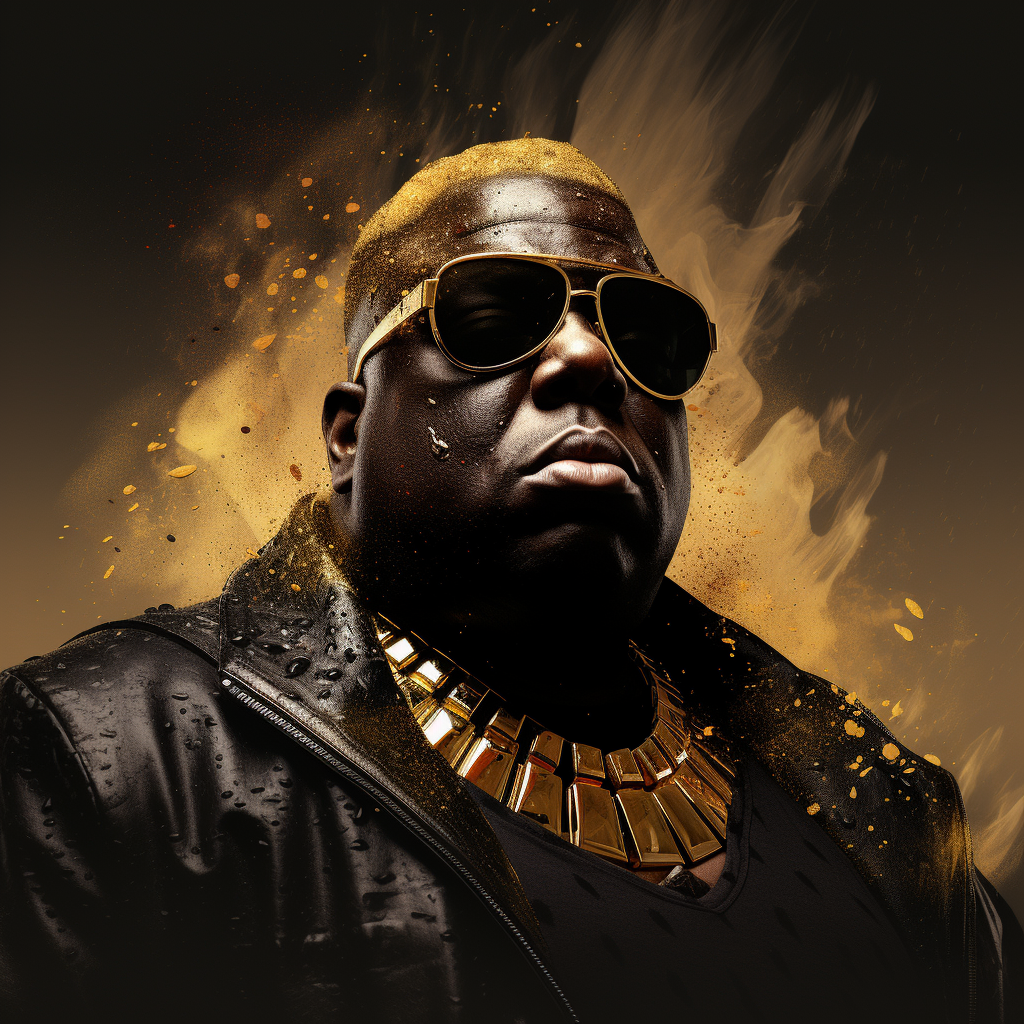
If the legendary rapper Notorious B.I.G. were alive today, his influence on the music industry would undoubtedly be profound and far-reaching. Born Christopher Wallace, Biggie Smalls left an indelible mark on the hip-hop genre during his tragically short life in the 1990s. Imagining how he would continue to shape the music landscape if he were still with us provides an exciting glimpse into what might have been. 1. **Evolution of His Style**: Notorious B.I.G. was known for his unparalleled storytelling ability and lyrical prowess. In today’s music industry, he would likely continue to evolve his style, adapting to the changing trends and innovations within hip-hop. His clever wordplay and intricate rhyme schemes would undoubtedly remain a cornerstone of his music. 2. **Collaborations and Features**: Biggie was a collaborator extraordinaire during his time, and this trend would likely continue in the modern era. Imagine the iconic rapper teaming up with contemporary artists from various genres, creating cross-genre hits that blend rap, R&B, and even pop. His collaborations could potentially bridge the gap between generations of music fans. 3. **Mentoring New Talent**: Many successful artists today have cited Biggie as a major influence on their careers. If he were alive, he might take on a mentorship role for emerging artists, passing on his knowledge and experience to the next generation of hip-hop talent. This would further solidify his legacy and impact on the genre. 4. **Social and Political Commentary**: Notorious B.I.G. was not just a talented rapper but also a keen observer of the social and political issues of his time. In today’s world, characterized by significant social movements and political shifts, he would likely use his music as a platform to address relevant issues, offering a unique perspective through his lyrical genius. 5. **Entrepreneurship**: The modern music industry places a significant emphasis on entrepreneurship and branding. Biggie, with his business acumen, might have ventured into fashion, film, or other creative industries. His larger-than-life persona could have translated into a multimedia empire, akin to what artists like Jay-Z have achieved. 6. **Influence on Modern Sound**: Biggie’s influence on the sound of hip-hop is immeasurable. His distinctive flow, storytelling abilities, and sampling techniques have inspired countless artists. If he were alive, we might see a resurgence of the classic ’90s hip-hop sound, infused with contemporary elements, as a nod to his legacy. 7. **Streaming and Digital Era**: The digital era has transformed the way music is consumed and distributed. Biggie, if alive today, would likely embrace digital platforms and social media to engage with his fans directly. He might have released surprise albums, interacted with fans on social media, and utilized streaming platforms to their fullest potential. 8. **Continued Chart Success**: Biggie’s timeless hits like “Juicy,” “Big Poppa,” and “Mo Money Mo Problems” remain popular today. If he were alive, these classics might see resurgence on the charts and continue to influence younger generations of artists. 9. **Cultural Icon**: Notorious B.I.G. would continue to be a cultural icon, not just in the music world but in pop culture at large. His image and music would likely permeate movies, TV shows, and fashion trends, ensuring that his impact extends beyond the realm of music. In conclusion, if Notorious B.I.G. were alive today, his influence on music would be as profound as it was during his prime in the 1990s. He would adapt to the ever-changing music landscape while staying true to his lyrical genius and storytelling abilities. His impact would extend beyond music into entrepreneurship, social commentary, and cultural influence, solidifying his status as one of the greatest artists of all time. While we can only imagine what might have been, Biggie’s legacy continues to inspire and shape the future of hip-hop.

Angel Digital Art

Leeds Tattoo Artist

Digital art has undeniably revolutionized the world of art in recent years, impacting various creative fields, including the tattoo industry. This transformation has been driven by technological advancements, changing artistic paradigms, and shifts in consumer preferences. In this 600-word exploration, we will delve into how digital art has taken over the art world and examine its profound influence on the tattoo industry. The Rise of Digital Art: Digital art’s ascendancy can be attributed to several factors. Firstly, the accessibility of digital tools has democratized the creation of art. With the proliferation of powerful and affordable digital drawing tablets, software, and online platforms, anyone with an artistic inclination can try their hand at creating digital masterpieces. This democratization has expanded the pool of artists, fostering innovation and diversity within the art world. Secondly, digital art offers unparalleled flexibility and convenience. Artists can easily experiment with various styles, techniques, and color palettes without the constraints of physical mediums. Mistakes can be undone with a simple keystroke, encouraging exploration and risk-taking. This has led to the emergence of new art forms and styles that may not have been feasible with traditional tools. The Influence on the Tattoo Industry: The tattoo industry has been significantly impacted by the rise of digital art. Tattoo artists, traditionally reliant on paper sketches and hand-drawn designs, now have access to digital tools that streamline the design process. They can create intricate, precise designs with ease, allowing for greater customization and collaboration with clients. One of the most profound effects is the ability to create highly detailed and realistic tattoo designs. Digital art enables tattoo artists to create photorealistic portraits, intricate geometric patterns, and detailed illustrations that were challenging to achieve with traditional techniques. This level of detail has expanded the possibilities for tattoo artistry, pushing the boundaries of what can be permanently inked onto the skin. Moreover, the collaboration between tattoo artists and clients has been enhanced through digital art. Clients can provide reference images, make adjustments in real-time, and visualize the final tattoo design before it becomes permanent. This interactive process ensures that clients are more satisfied with the end result, reducing the risk of regrets or miscommunication. Another significant impact is the globalization of tattoo artistry. Digital platforms and social media have enabled tattoo artists to share their work with a global audience. Artists from different corners of the world can inspire and influence each other, leading to the fusion of various artistic styles and cultural influences. This cross-pollination has enriched the tattoo industry, resulting in a broader range of designs and techniques. Furthermore, digital art has changed the marketing and business aspect of the tattoo industry. Tattoo parlors can showcase their artists’ digital portfolios online, attracting a broader clientele and helping clients make informed choices. Social media platforms have become invaluable tools for tattoo artists to promote their work and connect with potential clients, creating a global marketplace for tattoo artistry. In conclusion, digital art has undeniably taken over the world of art, and its impact on the tattoo industry has been transformative. The accessibility, flexibility, and collaborative nature of digital art have elevated the quality and diversity of tattoo designs. Moreover, it has enabled global connections, cross-cultural influences, and effective marketing strategies that have propelled the tattoo industry into a new era of creativity and innovation. As digital art continues to evolve, we can expect even more exciting developments in the world of tattoos, pushing the boundaries of what is possible in this ancient art form.

Leeds Tattoo Studio

How important it is to draw as a tattoo artist

Leeds Tattoo Studio

Tattoo Artist Leeds

Drawing is an integral skill for any tattoo artist, as it plays a pivotal role in delivering professional and artistic tattoos. While many may think of tattooing as purely a technical endeavor, the truth is that being an artist, with a strong background in drawing, significantly enhances a tattoo artist’s ability to create exceptional and meaningful body art. First and foremost, drawing serves as the foundation for tattoo design. Before any ink touches a client’s skin, the tattoo artist must translate their ideas, concepts, and client preferences into a visual representation. This process often starts with sketching and refining ideas on paper. A tattoo artist who possesses strong drawing skills can effectively communicate with clients, understanding their vision and turning it into a detailed design. This ability to sketch and conceptualize ensures that the client’s expectations are met and that the final tattoo will be a unique and personalized piece of art. Furthermore, drawing allows tattoo artists to explore creativity and experiment with different styles and techniques. A skilled artist can draw inspiration from various sources, from traditional tattoo designs to contemporary art trends, and incorporate these elements into their work. This versatility in style is invaluable, as it enables the artist to cater to a wide range of client preferences, from classic to modern, realistic to abstract, and everything in between. Being well-versed in drawing techniques opens up a world of possibilities for creating tattoos that are both visually stunning and deeply meaningful. Drawing also plays a crucial role in perfecting the technical aspects of tattooing. Tattoo artists need a keen eye for detail, precision, and a steady hand to execute intricate designs. The dexterity and control developed through drawing directly transfer to the tattooing process. A tattoo artist’s ability to create clean lines, shading, and gradients is greatly enhanced by their drawing skills. This precision is essential for ensuring that the tattoo looks crisp and polished, even as it ages. Moreover, being an artist in the background allows tattoo artists to constantly refine their craft. Regular drawing practice sharpens their artistic sensibilities and keeps their skills up-to-date. It encourages them to stay open to new ideas, techniques, and trends in the ever-evolving world of tattoo artistry. Drawing serves as a means of continuous self-improvement, enabling tattoo artists to push their boundaries and reach new heights in their work. Beyond the technical aspects, drawing also fosters a deep understanding of art theory, composition, and color theory. Tattoo artists who grasp these principles can create tattoos that not only look aesthetically pleasing but also have a balanced and harmonious design. This artistic knowledge allows them to make informed decisions about color choices, placement, and size, ensuring that each tattoo flows seamlessly with the body’s contours and complements the client’s natural features. Additionally, drawing provides a strong foundation for storytelling through tattoos. Many clients seek tattoos that convey a specific message or narrative. Tattoo artists with a background in drawing can skillfully incorporate symbolism, imagery, and storytelling elements into their designs, making each tattoo a meaningful and personal expression of the client’s story. In conclusion, drawing is undeniably crucial for tattoo artists in delivering professional and artistic tattoos. It forms the backbone of the creative process, enabling artists to translate ideas into tangible designs, experiment with styles, and maintain technical precision. Drawing skills also facilitate continuous improvement and a deep understanding of art theory, composition, and storytelling. Withdrawing as a fundamental skill, tattoo artists can offer clients not just ink on skin but beautiful, meaningful, and timeless works of art that will be cherished for a lifetime.


Black and Grey Half Sleeve Tattoo Leeds

Tattoo Studio Leeds

Black and grey tattoos in Leeds, have undergone a remarkable transformation over the years, evolving into a highly sophisticated art form that can create astonishing 3D realism effects on the skin. This evolution in Leeds, is a testament to the ingenuity and skill of tattoo artists who have pushed the boundaries of what can be achieved in the world of body art. In the early days of tattooing, black and grey tattoos were relatively simple and consisted mainly of bold, dark lines and shading. Artists used a limited range of tools and pigments, which constrained their ability to create intricate and lifelike designs. However, as the tattoo industry gained popularity in Leeds and the world, and recognition as a legitimate art form, artists began to experiment with new techniques and materials. One significant milestone in the evolution of black and grey tattoos was the introduction of the single needle technique. This fine-line approach allowed for greater detail and precision in shading and created a softer, more realistic look. With a single needle, artists could capture the subtle nuances of light and shadow, giving tattoos a depth and dimensionality previously unattainable. Another crucial development was the use of different shades of black and grey ink. Tattoo artists in Leeds started to incorporate various tones and gradients into their work, mimicking the way light interacts with different surfaces. This newfound versatility enabled them to create tattoos that appeared to pop off the skin, achieving a 3D effect that was truly mesmerizing. As technology advanced, so did the tools available to tattoo artists. Machines designed specifically for black and grey realism tattoos became more precise and efficient. These machines allowed artists to control the depth and speed of their needle strokes with unparalleled accuracy, resulting in tattoos that looked more like high-resolution photographs than traditional body art. Additionally, the quality of ink improved dramatically. Tattoo ink formulations became more stable and consistent, ensuring that tattoos would retain their vibrancy and detail over time. This was essential for 3D realism tattoos, as even the smallest changes in ink color or fading could significantly impact the overall effect. The rise of talented and specialized black and grey realism artists further propelled the evolution of this style. These artists dedicated themselves to perfecting the art of creating lifelike portraits, animals, and objects on the skin. Their expertise in capturing minute details, such as the texture of skin, hair, or fabric, made it possible for tattoos to achieve an unprecedented level of realism. One of the most exciting developments in recent years is the fusion of black and grey tattooing with other artistic styles and mediums. Artists now seamlessly blend elements of realism with surrealism, impressionism, and even abstract art to create unique and visually stunning tattoos. This fusion of styles adds an extra layer of complexity and intrigue to black and grey tattoos, pushing the boundaries of what can be achieved on the human canvas. Furthermore, advancements in tattoo aftercare and healing techniques have ensured that black and grey realism tattoos age gracefully. Proper care and maintenance allow these tattoos to retain their vividness and detail, ensuring that they continue to look stunning for years to come. In conclusion, the evolution of black and grey tattoos with 3D realism effects has been a captivating journey marked by innovation, dedication, and artistic brilliance. From the early days of rudimentary shading to the sophisticated techniques and tools available today, black and grey realism tattoos have become a true testament to the fusion of art and technology. As this art form continues to evolve, it will undoubtedly inspire and captivate both tattoo enthusiasts and artists alike for generations to come.


  • Book your tattoo